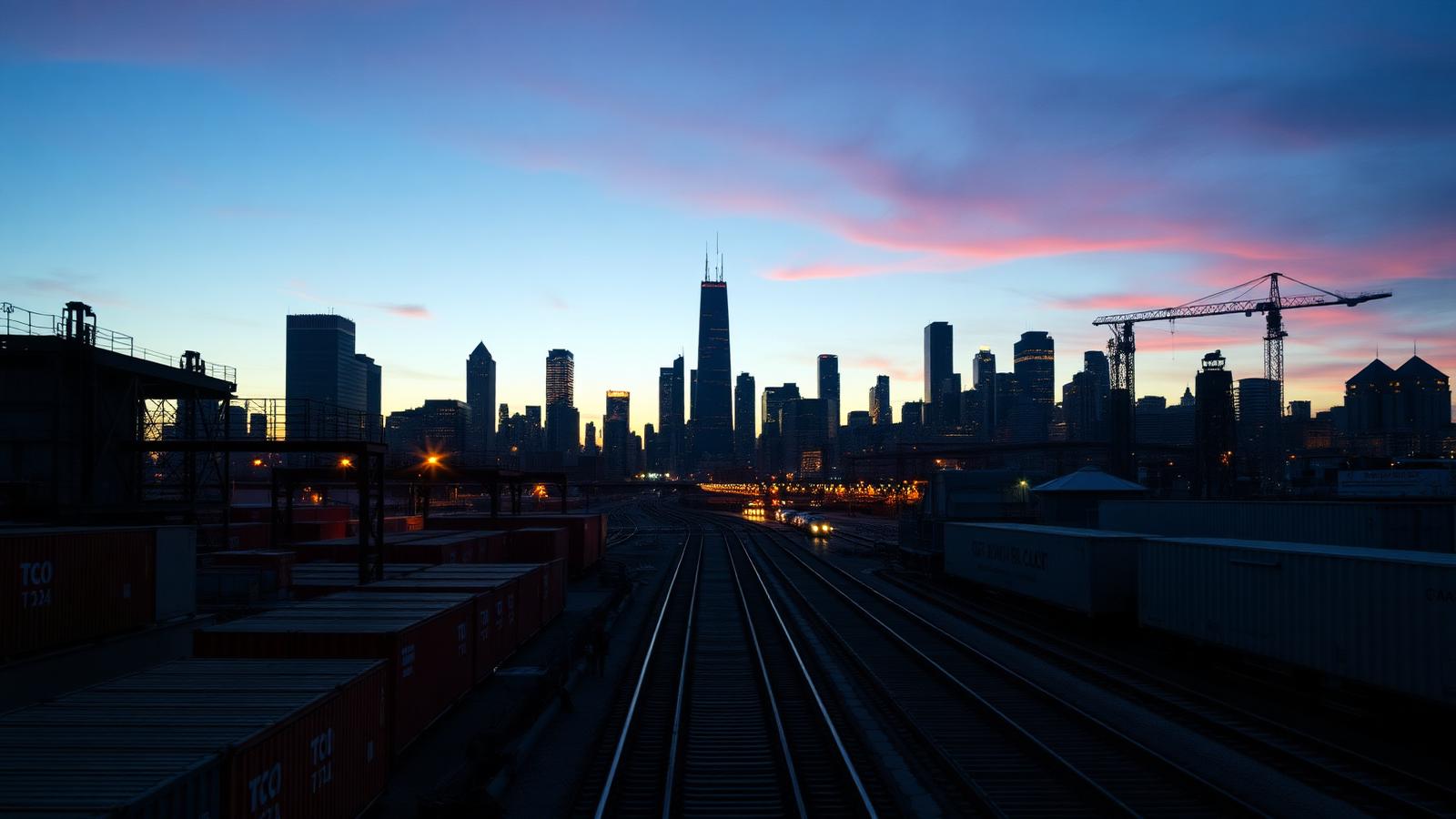
Chicago's industrial corridor is dense with food processors, metal fabricators, packaging converters, and equipment makers. Distributor and grocery terms make working capital a constant conversation.
How do manufacturers in Chicago, IL get financing?
Manufacturers in Chicago, Illinois raise working capital through invoice factoring, equipment financing, purchase order funding, asset-based lending, and SBA term loans. food-and-beverage-manufacturing and metal-fabrication shops selling on net-30 to net-90 terms are the most common fit across the Midwest market.
You're running a plant somewhere along the rail lines — could be Bedford Park, Elk Grove, Aurora, Joliet. The order book is fine. The customers are Kraft, Kroger, Sysco, US Foods, ADM, or a big packaging OEM.
None of those customers pay in 15 days. Some of them go 60. A few go 90. Meanwhile the corn, resin, corrugate, or steel invoice is due right now.
That's why Chicago has one of the deepest bench of factoring and asset-based lenders in the country — and why matching you to the right one matters more than just finding one.
Not ready for a call? Email a specialist about Chicago, IL financing — A specialist reviews every request and reaches out within 1 business day. No pressure, no obligation, no fees to you.
Manufacturing financing in Chicago, IL
Manufacturing financing in Chicago, Illinois, is shaped by the work Food & Beverage Manufacturing, Metal Fabrication, and Packaging Manufacturing shops do every day. Most Chicago manufacturers need funding that matches net-30 to net-60 payment cycles, not a generic business loan. The best-fit programs here are typically Invoice Factoring, Purchase Order Financing, and Equipment Financing. Manufactor Finance matches Chicago manufacturers with the right funding institution for their situation, with no equity and no application fees.
Chicago manufacturers in Food & Beverage Manufacturing, Metal Fabrication, and Packaging Manufacturing usually start with Invoice Factoring because it lines up with how their customers pay.
The same honest process everywhere we refer: no 60-second miracle, no teaser rates.
1
Start the conversation
Day 0
A quick app or a phone call. Free, no obligation. Tell us the basics so we can start the referral process for you.
2
Referral
Day 0–1
We identify the institution and program that actually fits your business, revenue profile, and timeline. This step is at no charge to you.
3
Secure application
Day 1–3
The funding partner sends you its own secure application. You complete it and send your documents straight to them.
4
Underwriting
Day 3–7
The funding partner reviews your file and runs underwriting. Any questions come to you directly from them.
5
Offer(s)
Day 5–10
You receive your offer, or in some cases multiple offers to compare side-by-side. If nothing fits, you owe nothing.
6
Sign
Day 7–12
You sign your agreement directly with the funding institution.
7
Funds land
Day 8–14
Money hits your account.
8
Back to work
Ongoing
Funds are in, and you keep building.
Why Chicago, IL shops use factoring and financing
Chicago's food, packaging, and metal shops sell into some of the largest, slowest-paying customer bases in the US. That combination — steady demand plus long DSO — is exactly what factoring and ABL structures are designed for.
Common buyers: national grocery chains, foodservice distributors, packaging OEMs, industrial distributors
Typical terms: net-30 to net-90, with promotional terms stretching further
How each program fits Chicago's industries and payment terms
Every program below is placed through funding partners we work with, mapped to the industries and payment cycles common in the Chicago market. Ranges are directional: your actual offer depends on your customers, credit, revenue, and industry.
Invoice Factoring
Best fit here
Invoices to national grocery chains and foodservice distributors here typically settle on net-30 to net-90. A factoring line turns those receivables into cash at an 80–95% advance, usually about 1–3.5% per 30 days, and the line grows with sales instead of collateral history.
When a confirmed order from national grocery chains and foodservice distributors lands, PO financing pays the supplier for commodity ingredient and steel buys directly, so the Chicago shop can take the order instead of passing on it.
Chicago shops adding capacity for Food & Beverage Manufacturing programs typically finance the machine instead of draining cash: up to 100% of cost, roughly 7–18% APR depending on the asset, funded in about 5–15 business days.
For larger Food & Beverage Manufacturing operations here, an ABL revolver scales with the balance sheet: receivables from national grocery chains and foodservice distributors, inventory, and equipment all count toward the borrowing base, so the line grows as orders grow.
For the short gaps, commodity ingredient and steel buys ahead of a ramp, or a payroll catch-up while net-30 to net-90 receivables settle, working capital runs $25K–$5M and typically funds in 2–7 business days.
Chicago owners planning an expansion, an acquisition, or a real estate buy usually find the lowest cost of capital in SBA or term structures: up to $5M, roughly Prime + 2.75–4.75%, and the documentation to match.
A side-by-side look at how each program tends to play in Chicago, IL — ranked by how often it's the right fit for the manufacturers and buyers concentrated here. Your actual match comes out of the conversation.
Speeds and sizes are typical ranges, not offers. Actual terms depend on underwriting and the funding partner. We are an independent referral service, not a bank, lender, or investor — nothing here is a commitment to fund.
National program guides for Chicago manufacturers
The mechanics behind each program: real cost ranges, realistic timelines, and who typically qualifies.
The core qualification check is the same one we run nationwide, and most Chicago-area food and beverage manufacturing and metal fabrication shops already match the profile funders want: commercial or government buyers paying on terms. Here is the 10-second version:
US-based manufacturer producing goods domestically. Chicago shops and the surrounding Midwest corridor both qualify.
B2B or B2G customers, not consumer retail.
$25K or more in monthly revenue, or a confirmed purchase order that gets there.
Net-15 to net-90 payment terms with your own customers.
Not sure your file clears it? Score your readiness in 8 questions before you apply anywhere.
Usually, yes. For the industry mix we see in Chicago, the first look is typically invoice factoring against your commercial AR, and programs like these weigh your customers' payment history and your equipment far more than your personal credit score. Banks in Illinois decline files for concentration, collateral, and seasoning reasons that non-bank funders price differently, so a decline is a data point, not a verdict.
Invoice factoring underwrites the credit of the customers who owe you money more than yours.
Thin files, past bankruptcies, and bank declines can all still qualify.
A confirmed PO from a creditworthy buyer can open purchase order financing even for younger Chicago shops.
Chicago, IL — Programs, buyers & timeline FAQs
Chicago's food, packaging, and metal shops sell into some of the largest, slowest-paying customer bases in the US. That combination — steady demand plus long DSO — is exactly what factoring and ABL structures are designed for. That's why the funding conversation for a Chicago-area shop rarely starts with "do I qualify" — it usually starts with matching the right structure to how your specific buyers pay and how your production cycle burns cash.
Given the mix of food and beverage manufacturing and metal fabrication we see in the Chicago area, the first look for most shops is invoice factoring against your commercial AR, with an equipment or working-capital line as the shop grows layered in as the shop grows. We'll tell you honestly which one fits before you fill out anything long. Compare all 6 side by side on the Chicago programs page.
Most Chicago-area shops we refer are selling into national grocery chains, foodservice distributors, packaging OEMs, industrial distributors. Those receivables are typically on net-30 to net-90, with promotional terms stretching further, and the working-capital pinch usually comes from commodity ingredient and steel buys, seasonal ramps, private-label launches. Every one of those pieces is something factoring, PO financing, and equipment lines are built to solve.
For your program mix, factoring is typically 7–14 business days to first funding, then 24–48 hours per invoice; equipment financing adds 5–15 business days when it makes sense. The gate is almost always document turnaround on your side, not underwriting. A clean AR aging, three months of business bank statements, and a customer list is usually enough for us to refer your file.
Illinois manufacturers can layer state incentives (EDGE, Manufacturing MERIT) on top of a private funding referral, and the Chicago SBA District Office is one of the more active in the country. Cook County property and personal-property nuances sometimes come up in ABL field exams.
Locally, the growth story is private label expansion, reshoring, packaging automation. That matters for funding because underwriters read your file against the local narrative — a Chicago shop tied into that growth is a lender-friendly story, and it usually helps us get to a better program fit faster.
No. This page focuses on Chicago because it's one of our active Midwest markets, but our process and funding network are the same anywhere in Illinois — and nationwide for any US-based manufacturer.
Fees, ownership & who we are
No. There are no application, origination, or closing fees to you at any stage, whether you are a food and beverage manufacturing and metal fabrication shop in Chicago proper or anywhere else in the Midwest corridor. Manufactor Finance is an independent business financing referral service, not a lender: our funding partners fairly compensate us for our part only after a referred Chicago-area manufacturer has actually received their funds. Nothing additional is required from you. Manufactor Finance is a Preferred Partner of the American Manufacturing Association (AMFGA) and commits 25% of every dollar we earn to AMFGA. The 2 organizations are independent, and neither owns the other. AMFGA is a manufacturing association, not a bank, lender, or funding institution: it does not review applications, underwrite, approve, price, endorse, or guarantee any funding offer. All rates, terms, and approval decisions are made solely by the independent funding institution.
No, and no equity in your Chicago shop is ever taken as part of a referral. Manufactor Finance is an independent business financing referral service that matches US manufacturers to the right non-dilutive funding program from our network of vetted US funding partners. The Illinois institutions we refer to are independent: we do not own them, and they do not own us. You sign directly with the funding institution, which sets your terms during underwriting. We also do not help with grants, grant writing, or grant applications. Services are delivered remotely by US-based specialists, so this Chicago page does not represent a physical office.
Free PDF · Written for Chicago
Funding Guide for Chicago, IL manufacturers
Programs, typical structures, timelines, and what underwriters actually look at — written specifically for the buyer mix and industry base concentrated in the Chicago metro. No pitch, no obligation.
Why funding for Chicago shops looks the way it does
Program-by-program fit for your local buyer mix
Realistic timelines, docs, and common disqualifiers
How Manufactor Finance is compensated — $0 fees to you
4-page PDF · Localized to Chicago, IL · Not an offer to lend or a rate quote — see disclosures below.
Free PDF
Funding Requirements Checklist for Chicago, IL manufacturers
See exactly what underwriters actually look at — for factoring, PO financing, equipment, working capital, ABL, and SBA — before you fill out a single application.
What documents you need for each program
Typical time-to-fund by program
Common disqualifiers worth knowing up front
How Manufactor Finance is compensated — $0 fees to you
3-page PDF · No application, origination, or closing fees to you · We're a independent referral service, not a bank.
Chicago is one metro inside a larger Illinois and Midwest footprint. These pages carry the same program detail for the markets next door and the levels above.
Gary anchors the Calumet steel corridor — US Steel Gary Works, ArcelorMittal Indiana Harbor, and Cleveland-Cliffs — plus a dense Tier-2 metal-fab ecosystem.
Joliet is the intermodal hub of the Midwest, so packaging, fabrication, and equipment suppliers here work to freight schedules as much as production ones. The buyer credit is strong here; the payment cycles are long — which is exactly the profile AR-based financing was built around.
Elgin's converters and food-equipment builders sell into national grocery programs where payment terms are dictated, not negotiated. The buyer credit is strong here; the payment cycles are long — which is exactly the profile AR-based financing was built around.
Aurora is a metal fabrication and electronics market with real depth: Caterpillar Aurora, Cabot Microelectronics, and Chicago-area OEMs all pull from local suppliers. Aurora anchors the Fox Valley supplier belt, where mid-size job shops handle everything from precision sheet metal to EMS assembly.
Manufacturers in Michigan City, IN sit in a metal fabrication supply chain anchored by Sullair, ArcelorMittal Burns Harbor suppliers, and Chicago-area OEMs. Michigan City suppliers quote into both the Chicago metro and the Indiana steel corridor, which is a real advantage on freight and a real strain on working capital.
Kenosha's manufacturing base skews fabrication and logistics manufacturing, with Uline, Jockey International, and Amazon fulfillment suppliers setting the terms most suppliers work under. Kenosha sits on the Chicago-Milwaukee corridor and has rebuilt around distribution-adjacent manufacturing since the auto plants closed.
Location notice: A location page on this site indicates that Manufactor Finance is taking clients in that market — it does not represent a physical office, storefront, or licensed presence in that city or state. All services are delivered remotely by our US-based specialists. Manufactor Finance is an independent business financing referral service, not a bank, lender, direct funder, private equity firm, or investor, and we do not make credit decisions.
Keep reading
Hub resources that explain how state funding guides works for US manufacturers.
AI-assistedDepending on live availability, calls may be answered by Mary, our AI Assistant, who takes a message and books a callback. Or email us instead.
Calls may be answered by our AI Assistant Mary. Email instead