Industry
Financing for paper, pulp & printing companies
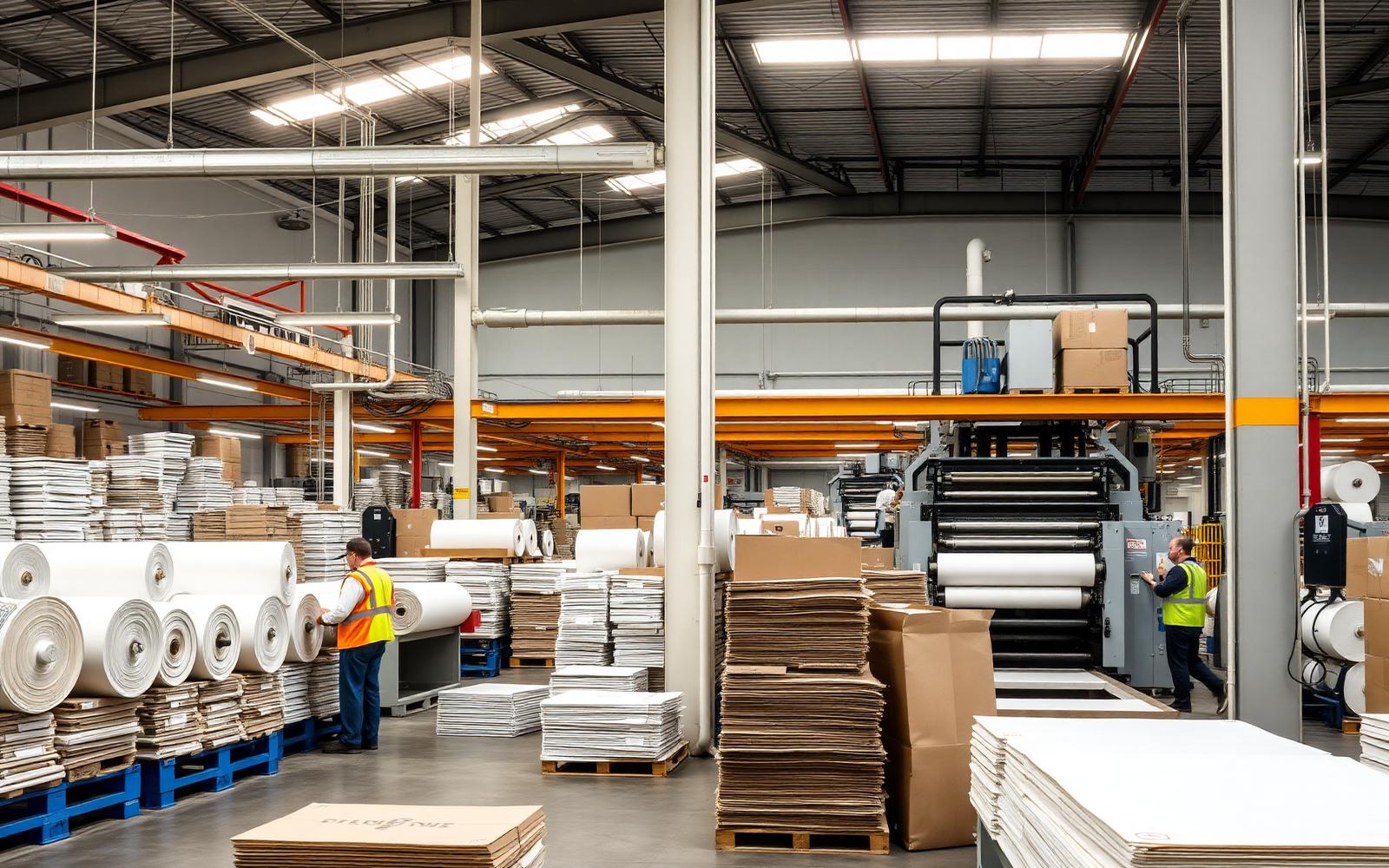
Paper and printing runs on razor-thin margins squeezed between volatile OCC and pulp pricing and publisher, retailer, and CPG customers who pay on their own schedule. We connect converters and printers with lenders who understand tonnage swings and press-time economics.
You watch containerboard and virgin pulp prices move by the week, then quote a job at today's cost and get paid against tomorrow's price. Meanwhile the box plant down the street just landed a national account that wants net-60 and volume discounts on day one.
That's the bind for corrugated converters, folding carton shops, and commercial printers alike: raw material and freight go out the door fast, and big retail, publisher, or CPG customers pay slow. A single large run of linerboard or a new web press can tie up six figures before the first invoice clears.
We work with lenders who've financed converters, sheet plants, and printers for years — people who know OCC index pricing, understand why a corrugator runs 24/7 during peak shipping season, and won't blink at a customer list full of retailers on extended terms.
Want a written answer specific to your paper, pulp & printing operation? Email a specialist — no pressure, no obligation, no fees to you.
Cash-flow challenges we solve
The specific spots where paper, pulp & printing operators run out of runway — and where the right funding structure keeps you moving.
- OCC, kraft, and virgin pulp price swings that hit input cost before the sale price is locked
- Retail, CPG, and publisher customers on net-45 to net-90 terms
- Seasonal peaks — back-to-school, holiday retail, produce packaging — that require pre-buying board and running overtime
- High capex for corrugators, web presses, folder-gluers, and finishing equipment
- Freight and diesel surcharges that erode margin on already-quoted jobs

How funding works for paper, pulp & printing
A typical referral path — tailored to how your cash cycle actually runs, not a generic small-business template.
You land the run or the standing order
A retailer, CPG brand, or publisher places an order for cartons, corrugated sheets, or a print run — real demand, real invoice coming.
We fund the paper and press time
Purchase order financing or a working capital line covers linerboard, kraft, ink, and plates so the job runs without draining your operating cash.
You invoice, we advance against it
Factoring advances 80–90% of the invoice within days of shipment instead of waiting 45–90 days for a retail or publisher payment.
Your customer pays on their terms, you reload
The factor collects on schedule and releases the reserve, and your line resets so you can quote the next run without hesitation.
Which program fits paper, pulp & printing best?
A side-by-side view of the programs manufacturers in this space actually use — ranked by how often they're the right fit for paper, pulp & printing operators. Your specific match depends on buyers, margins, and what you're trying to solve.
- Best for
- Shops with creditworthy B2B / gov buyers on net-30/60/90
- Speed
- 7–14 days to onboard, 24–48 hrs per invoice after
- Typical size
- $25K–$10M+ per month
- Watch for
- Your customers' credit matters more than yours
Converts open invoices into cash fast — a natural fit for Paper, Pulp & Printing shops selling to slow-paying commercial or government buyers.
See Invoice Factoring details- Best for
- Adding capacity — CNC, robotics, lines, tooling, vehicles
- Speed
- 3–10 business days
- Typical size
- $25K–$5M per asset
- Watch for
- Rate/term depend on asset age, condition, and useful life
Adds machinery, tooling, or vehicles for Paper, Pulp & Printing operations without draining working capital.
See Equipment Financing details- Best for
- Short-term gaps — payroll, materials, a specific catch-up
- Speed
- 2–7 business days
- Typical size
- $25K–$1M
- Watch for
- Shorter terms, higher effective cost — use with a clear payoff plan
Bridges short gaps in Paper, Pulp & Printing operations — payroll, a materials buy, or a specific catch-up — without a long approval process.
See Working Capital details- Best for
- Funded POs from creditworthy buyers when you can't self-fund materials
- Speed
- 1–3 weeks
- Typical size
- $100K–$25M per PO
- Watch for
- Gross margins usually need to clear ~20–25% to pencil
Sometimes used. Funds materials and production on real, awarded POs so Paper, Pulp & Printing manufacturers can accept orders bigger than their cash on hand.
See Purchase Order Financing details- Best for
- Established manufacturers with A/R, inventory, and equipment collateral
- Speed
- 3–6 weeks
- Typical size
- $1M–$50M+ revolver
- Watch for
- Requires monthly reporting and borrowing-base discipline
Sometimes used. A scalable revolver against A/R, inventory, and equipment — usually a fit for larger Paper, Pulp & Printing manufacturers with clean books.
See Asset-Based Lending (ABL) details- Best for
- Real estate, acquisitions, refis, long-horizon growth capital
- Speed
- 45–120 days
- Typical size
- $150K–$5M+
- Watch for
- Longest timeline and most documentation of any program
Sometimes used. Long-horizon capital for Paper, Pulp & Printing real estate, acquisitions, refis, or expansion — the slowest path, but usually the cheapest.
See SBA & Term Loans detailsSpeeds and sizes are typical ranges, not offers. Actual terms depend on underwriting and the funding partner. We are an independent referral service, not a bank, lender, or investor — nothing here is a commitment to fund.
Paper, Pulp & Printing financing — FAQs
Yes. A working capital line or PO financing facility can absorb a sudden jump in OCC or containerboard cost so you're not forced to turn down orders or delay a run while pricing resets.
Yes. Publisher and retail-insert receivables are common collateral for factors that serve the printing industry. Underwriting looks at the payer's credit, not just the printer's balance sheet.
Yes, through equipment financing. New and used corrugators, web and sheetfed presses, folder-gluers, and finishing lines are financeable, typically over 5–10 years matched to the equipment's useful life.
It pays your paper mill or board supplier directly so you can produce the order, then factoring bridges the gap once the invoice goes out, so a big order doesn't require cash you don't have on hand.
Yes. Revolving factoring and working capital lines are structured to expand during back-to-school and holiday production peaks and shrink in slower months, rather than locking you into fixed term debt year-round.
Typically yes, since factoring involves notifying the customer to redirect payment. Large retailers, publishers, and CPG buyers see this constantly and a professional factor handles notification without friction.
Factoring accounts are usually set up in 7–14 business days with advances in 24–48 hours after that. Equipment financing runs 5–15 business days; PO financing typically takes 2–3 weeks depending on supplier terms.
Related industries we fund
Packaging Manufacturing
Capital for corrugated, folding carton, flexible packaging, and label converters.
Chemical Manufacturing
Funding for specialty chemical, coatings, adhesives, and formulation producers.
Building Products & Construction Materials
Funding for concrete, drywall, roofing, siding, windows, and masonry manufacturers.
Paper, Pulp & Printing manufacturing hubs we serve
Jump into a local page for buyer context, eligibility, and program mechanics for paper, pulp & printing shops.
Keep reading
Hub resources that explain how state funding guides works for US manufacturers.
Related guides
Comparisons
Funding Requirements Checklist for US manufacturers
See exactly what underwriters actually look at — for factoring, PO financing, equipment, working capital, ABL, and SBA — before you fill out a single application.
- What documents you need for each program
- Typical time-to-fund by program
- Common disqualifiers worth knowing up front
- How Manufactor Finance is compensated — $0 fees to you
Talk to a funding specialist
Questions before you apply? A specialist can walk through this checklist with you, no pressure and no obligation.
Ready to keep production moving?
Start with a quick app or a phone call. We'll tell you exactly what the right program requires. At no charge.
Apply. Fund. Deliver. No obligation.
AI-assistedDepending on live availability, calls may be answered by Mary, our AI Assistant, who takes a message and books a callback. Or email us instead.