Working Capital · Jewelry, Hardgoods & Metal Finishing
Working Capital for Jewelry, Hardgoods & Metal Finishing shops
Cover the gap between orders and cash. We match jewelry, hardgoods & metal finishing manufacturers with the working capital structure that fits how you actually run — no equity given up, no application, origination, or closing fees to you.
Why jewelry, hardgoods & metal finishing shops choose working capital
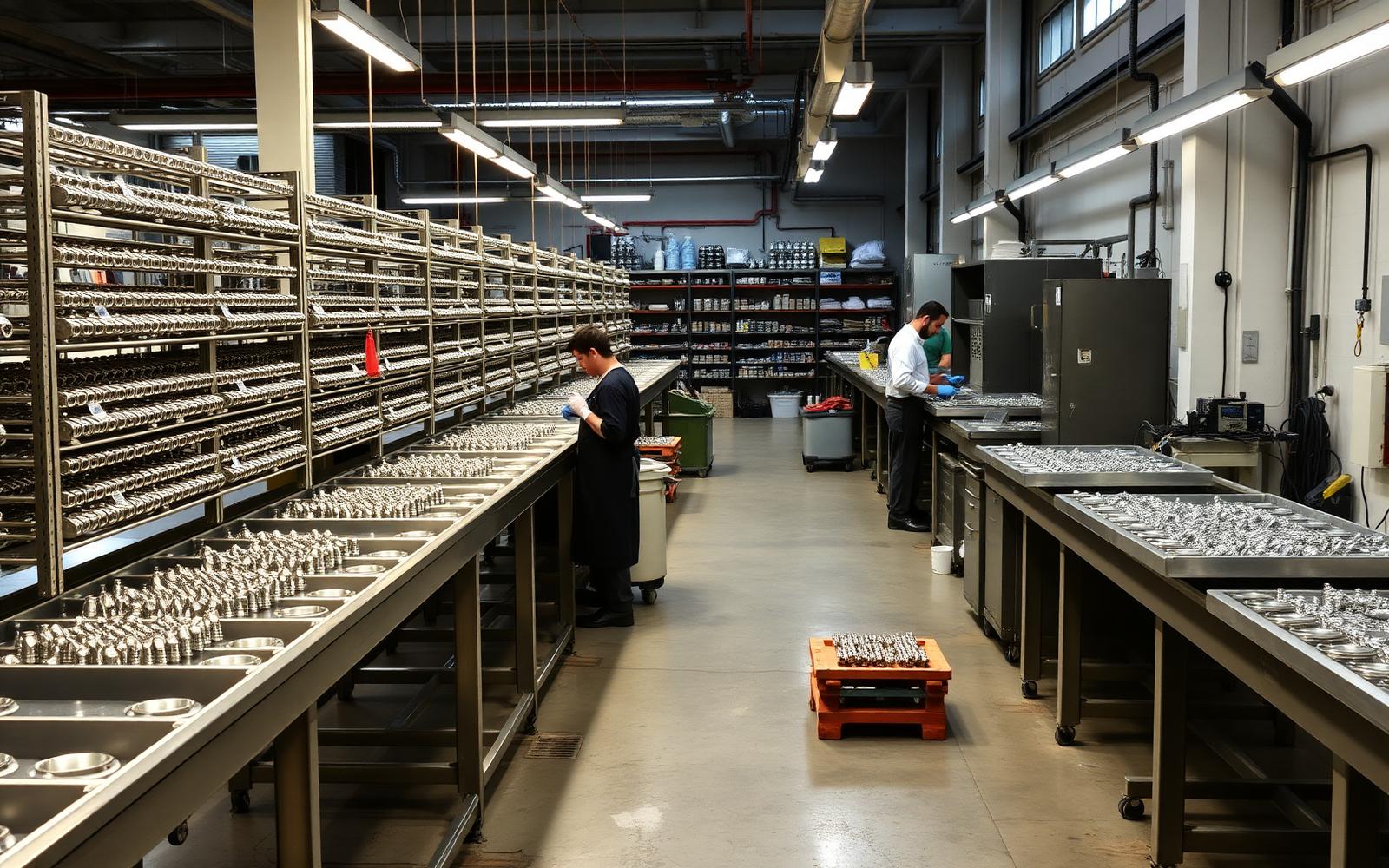
Every casting, plating tank, and polishing wheel in your shop represents cash you've already spent — gold and silver on account or consigned from a refiner, nickel and chrome plating chemistry, cyanide-based gold baths, powder coat and anodizing lines that cost real money to run compliant. Then a retailer, distributor, or OEM customer takes 45 or 60 days to pay for finished goods.
If you run a finishing or plating operation as a jobber for other manufacturers, you're floating chemical and labor costs on other people's parts, sometimes for weeks, before the invoice even goes out. Add in EPA and RCRA wastewater permitting, tank maintenance, and effluent testing, and the margin between what you spend and what you collect gets thin fast.
Working Capital is one of the most direct ways to close that gap. Short-term capital to bridge payroll, materials, and growth spikes.
What jewelry, hardgoods & metal finishing shops get
- Fast decisions with minimal paperwork
- Uses vary: payroll, materials, repairs, marketing, buyouts
- No equity given up
How it works
- 1Submit a quick app so we can identify the right program.
- 2Provide bank statements and basic financials.
- 3Receive offers with terms and pricing—choose what fits.
- 4Funds land in your operating account.
Cash-flow realities we see in jewelry, hardgoods & metal finishing
- Precious metal (gold, silver, platinum) tied up in raw inventory, work in process, and consigned stock
- Plating and finishing chemistry costs — nickel, chrome, gold baths, powder coat, anodizing — paid before customer invoicing
- EPA and RCRA wastewater permitting, effluent testing, and hazardous waste disposal compliance costs
- OEM jobbing work where you front chemical and labor cost on customer-owned parts for weeks before billing
- Retail and distributor customers on 45–60 day terms while metal and chemical suppliers want faster payment
Get referred for working capital
Tell us the basics. We'll confirm the fit and tell you exactly what this program requires before you fill anything long.
- ✓ No application, origination, or closing fees
- ✓ No equity given up
- ✓ US-based jewelry, hardgoods & metal finishing shops only
Other programs that fit jewelry, hardgoods & metal finishing
Asset-Based Lending (ABL) for Jewelry, Hardgoods & Metal Finishing
Revolving lines secured by receivables, inventory, and equipment.
Explore Asset-Based Lending (ABL) for Jewelry, Hardgoods & Metal FinishingInvoice Factoring for Jewelry, Hardgoods & Metal Finishing
Turn unpaid invoices into cash today—stop waiting on net-60 or net-90.
Explore Invoice Factoring for Jewelry, Hardgoods & Metal FinishingEquipment Financing for Jewelry, Hardgoods & Metal Finishing
Finance new or used machinery, CNC, robotics, and production lines.
Explore Equipment Financing for Jewelry, Hardgoods & Metal FinishingWorking Capital for other manufacturing niches
Frequently Asked Questions
Yes — working capital is one of the programs we most commonly place for jewelry, hardgoods & metal finishing shops. Manufacturers who need fast, flexible short-term capital to smooth cash flow or fund a specific opportunity. Full mechanics: the Working Capital program page. Sector overview: Jewelry, Hardgoods & Metal Finishing.
It depends on the program. Factoring often funds within days of account setup; equipment and working capital usually run days to a couple of weeks; SBA and larger term loans take longer. We tell you the real timeline up front.
No. We are an independent business financing referral service and are not paid by you. Our funding partners compensate us only after a referred manufacturer actually receives their funds.
No. Every program we refer is non-dilutive. You keep 100% ownership of your shop.
Yes. Asset-based lending facilities commonly advance against gold, silver, and platinum inventory alongside finished goods and receivables, with advance rates tied to current metal value and liquidity rather than book cost.
Consigned metal itself typically isn't collateral since you don't own it outright, but the finished inventory and receivables generated from consigned production can still support an ABL or factoring facility.
Amounts depend on revenue, time in business, and cash flow. Many manufacturers qualify for lines that scale with their monthly deposits.
- Facilities typically range from $25K to $5M.
- Approval leans on monthly revenue and bank activity more than collateral.
- Lines often scale with your average monthly deposits.
- Most programs want at least 6 months in business.
- If you invoice other businesses on terms, compare against invoice factoring.
- Score your readiness to see what size line your revenue supports.
Ready to keep production moving?
Start with a quick app or a phone call. We'll tell you exactly what the right program requires. At no charge.
Apply. Fund. Deliver. No obligation.
AI-assistedDepending on live availability, calls may be answered by Mary, our AI Assistant, who takes a message and books a callback. Or email us instead.