Pharmaceutical & Nutraceutical Manufacturing · Sub-niche
Sterile Injectables & Fill-Finish Financing
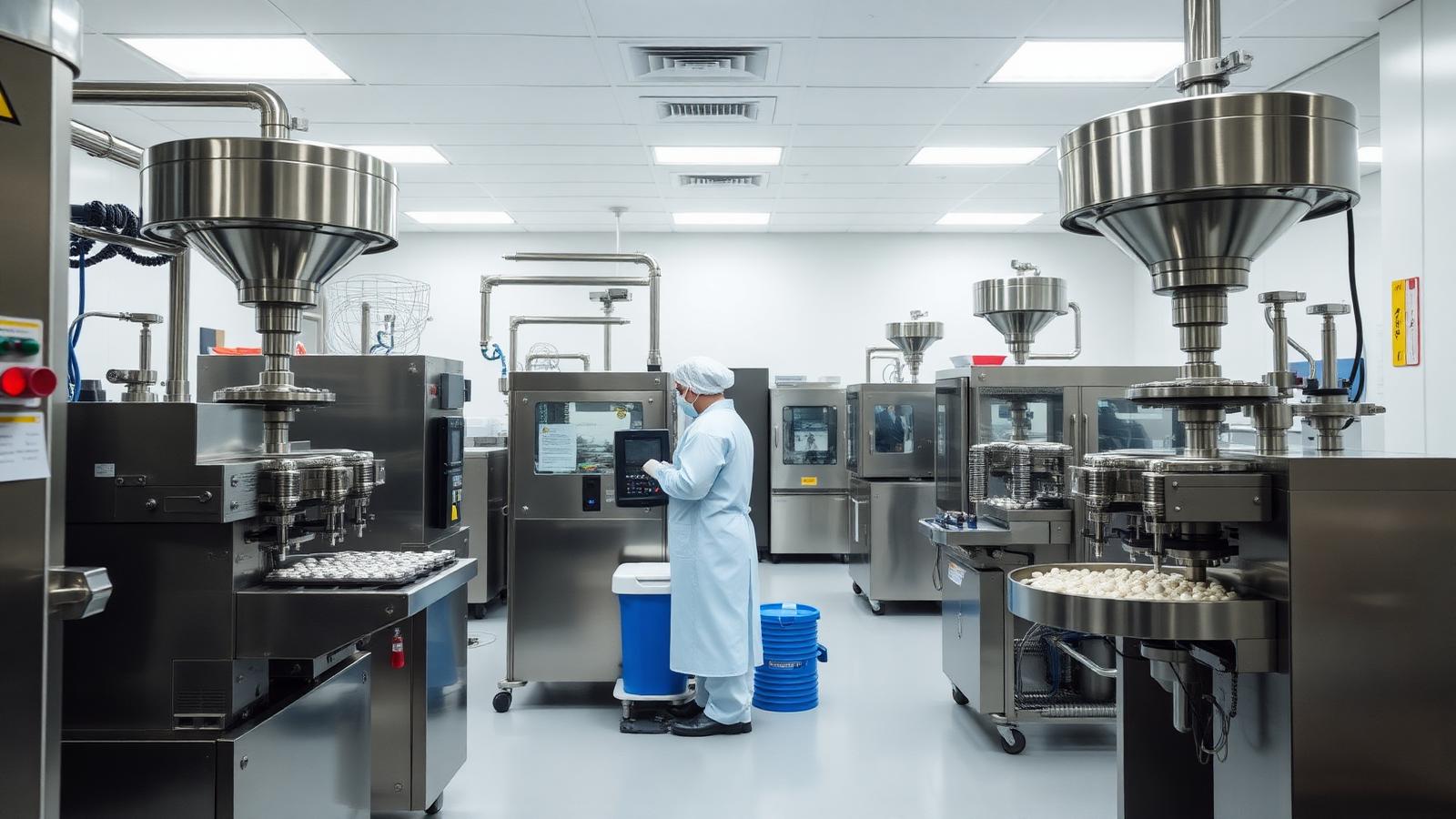
Sterile injectable and fill-finish operations carry some of the highest capital costs in manufacturing — isolators, lyophilizers, and Grade A filling lines — while working through long qualification cycles and pharma customer payment terms that can stretch past 60 days. Equipment financing, working capital, and asset-based lending bridge validation timelines and production ramp without slowing a batch release schedule.
You're running aseptic fill lines under Grade A/B classification, validating every lyophilization cycle, and waiting on a pharma sponsor or CDMO customer to pay 45 to 90 days after batch release — while your isolator maintenance contract and environmental monitoring costs don't wait for anyone.
A new filling line or barrier isolator system can run into eight figures, and financing it the wrong way ties up capital you need for the next tech transfer or FDA pre-approval inspection prep.
We work with funding partners who understand cGMP fill-finish economics, batch record turnaround, and why a receivable from a branded pharma sponsor or large CDMO is fundamentally different collateral than a typical manufacturing invoice.
Want a written answer specific to your sterile injectables & fill-finish operation? Email a specialist — no pressure, no obligation, no fees to you.
What underwriters will actually ask for
Sterile Injectables & Fill-Finish files have a specific documentation pattern. Bringing these up front usually cuts weeks off the timeline.
Current FDA facility registration and most recent inspection classification
Underwriters want your FDA establishment identifier and whether your last inspection closed as NAI, VAI, or OAI, since an open Form 483 with unresolved observations affects risk assessment.
Customer contracts or master service agreements with sponsors/CDMOs
Because fill-finish work is typically contracted years in advance, lenders want to see committed batch volumes or minimum-run agreements that support projected receivables.
Equipment specification and vendor quote for the filling line or isolator
Restricted access barrier systems (RABS), isolators, lyophilizers, and vial/syringe filling lines are financeable; include manufacturer, model, and installation/validation cost since qualification (IQ/OQ/PQ) is often bundled into the deal.
Trailing 12-month financials and batch throughput data
Interim P&L, balance sheet, and a breakdown of batches released versus batches rejected or reworked give underwriters a sense of production reliability and yield.
Aged accounts receivable by sponsor/customer
Concentration with one or two large pharma sponsors is common in this niche and typically affects advance rate rather than disqualifying the facility outright.
Environmental monitoring and quality system documentation
A summary of your EM program results and quality management system status (e.g., ISO 13485 for combination products, if applicable) supports underwriting on both equipment and working capital requests.
Programs sterile injectables & fill-finish operators actually use
Ranked by how often they're the right fit for this sub-niche, with the reason each one works written for sterile injectables & fill-finish specifically. Your actual match depends on buyers, margins, and the working capital problem you're solving.
Program
Equipment Financing
Why it fits here: Fill-finish lines, isolators, lyophilizers, and inspection systems are heavy capital with long lives. Financing matches terms to the asset while cash stays in validation and staffing.
See how it works →
Program
Working Capital
Why it fits here: Bridges the gap between a new sponsor's tech transfer and steady-state batch invoicing, or a capacity crunch while a line turnaround is scheduled.
See how it works →
Program
Asset-Based Lending (ABL)
Why it fits here: For established CDMOs, a revolver against receivables and equipment scales with the program book. Best fit past the startup stage with clean quality records.
See how it works →
Important disclosures for sterile injectables & fill-finish
This page is for informational purposes only. Manufactor Finance is an independent business financing referral service — not a bank, lender, direct funder, private equity firm, or investor, and not the FDA, DEA, or any state board of pharmacy. Nothing here is regulatory, quality, or legal advice regarding cGMP compliance or drug approval status. Financing terms, advance rates, and eligibility are determined solely by the funding partner and vary based on inspection history, customer contracts, and equipment valuation.
A location page on this site indicates that Manufactor Finance is taking clients in that market — it does not represent a physical office, storefront, or licensed presence in that city or state. All services are delivered remotely by our US-based specialists. Manufactor Finance is an independent business financing referral service, not a bank, lender, direct funder, private equity firm, or investor, and we do not make credit decisions.
Sterile Injectables & Fill-Finish financing by city
Local pages for every metro we serve, with the buyer mix and payment terms that shape the file.
Sterile Injectables & Fill-Finish financing — FAQs
Yes, equipment financing is commonly used for isolator and RABS filling lines, though funders typically want the vendor's installation and validation costs itemized separately from the equipment purchase price.
Not automatically — funders review the observations and your response timeline; a facility actively addressing 483 observations with a documented corrective action plan is generally still financeable.
Heavy concentration with a single sponsor usually results in a more conservative advance rate on receivables rather than an outright decline, since the underlying sponsor credit is often investment-grade.
Yes — working capital facilities are commonly used to cover payroll, raw material, and QC lab costs during tech transfer and process validation batches before commercial revenue begins.
Used lyophilizers and filling equipment can be financed, but expect a requirement for third-party inspection or requalification documentation given the precision tolerances involved.
If your facility handles controlled substances, funders will ask about your DEA registration status, but this affects documentation requirements rather than program eligibility itself.
Other pharmaceutical & nutraceutical manufacturing sub-niches
cGMP Contract Manufacturing (CMO)
Factoring, PO financing, and equipment loans for cGMP pharma and nutraceutical contract manufacturers.
OTC & Private Label
Working capital and PO funding for OTC and private-label pharmaceutical and remedy manufacturers.
Nutraceutical & Dietary Supplements
Factoring, PO financing, and equipment loans for nutraceutical and dietary supplement manufacturers.
API & Fine Chemical Synthesis
Asset-based lending, equipment financing, and working capital for API manufacturers and fine chemical synthesis operations.
Funding Requirements Checklist for US manufacturers
See exactly what underwriters actually look at — for factoring, PO financing, equipment, working capital, ABL, and SBA — before you fill out a single application.
- What documents you need for each program
- Typical time-to-fund by program
- Common disqualifiers worth knowing up front
- How Manufactor Finance is compensated — $0 fees to you
Talk to a funding specialist
Questions before you apply? A specialist can walk through this checklist with you, no pressure and no obligation.
Ready to keep production moving?
Start with a quick app or a phone call. We'll tell you exactly what the right program requires. At no charge.
Apply. Fund. Deliver. No obligation.
AI-assistedDepending on live availability, calls may be answered by Mary, our AI Assistant, who takes a message and books a callback. Or email us instead.